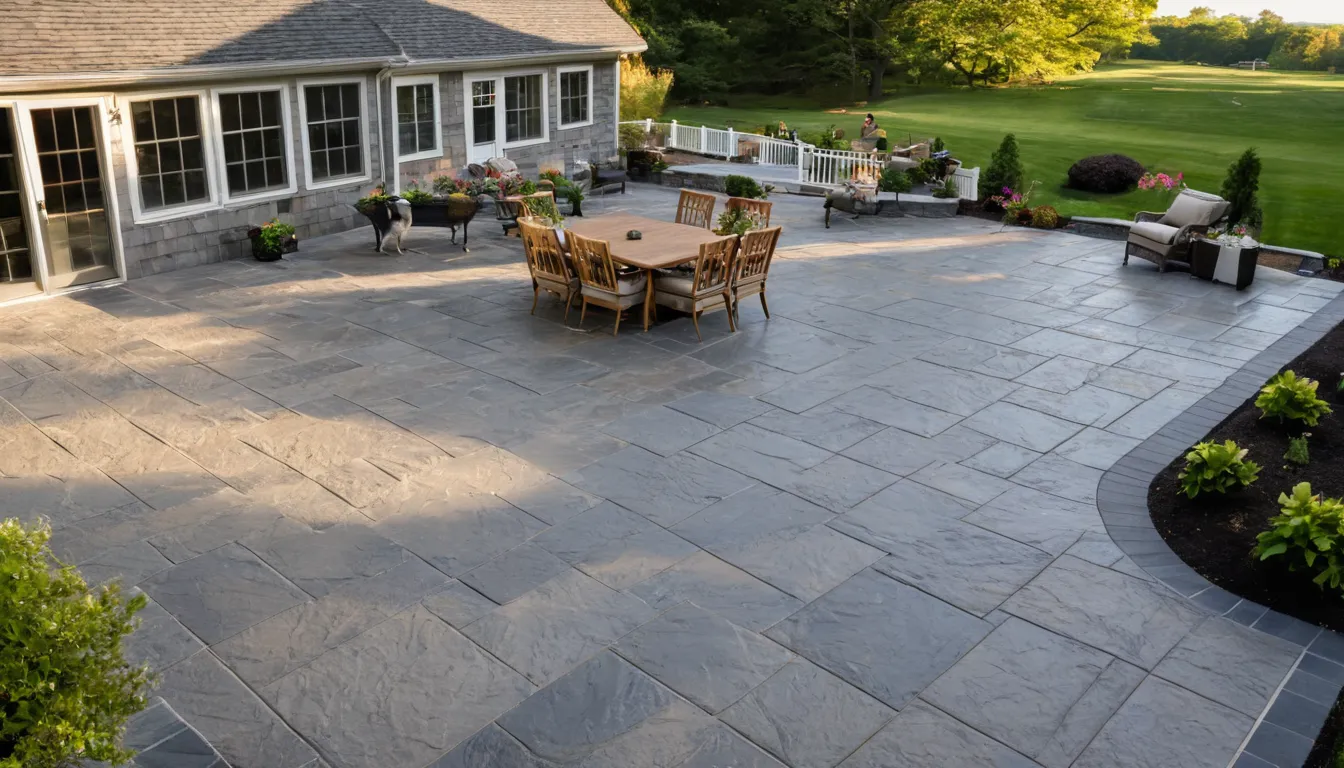
Stamped concrete is poured concrete pressed with patterns while it is still soft. It can look like slate, brick or wood plank, and it suits patios, walkways and pool decks. It also leaves you with fewer joints to clean than many paver layouts.
Gamingsteady Concrete is a referral service for homeowners in the Stamford area. We do not do the work. We connect you with independent local providers in our network who pour and stamp concrete. This page explains how the job works, what to ask, and what to avoid. It also covers the care that helps the surface get through cold winters, so you can plan around school runs, work shifts and weekends.
Plan before you pour
Stamped concrete is regular concrete pressed with patterns while it is still soft. The finished surface can look like stone, slate or brick. It also asks for careful timing, so a busy household should plan first.
Gamingsteady Concrete is a referral service. It does not pour or finish concrete. It connects you with independent local providers who do.
Do this, skip that before you hire
- Do measure the space and decide how you will use it.
- Do ask for a written quote that lists the base, the pattern, the color and the sealer.
- Skip any plan with no compacted gravel base.
- Skip a start date in cold, wet weather unless the provider explains how the slab will be protected.
How stamped concrete is made
The work follows a set order. The provider clears the area, levels it and packs a gravel base. Forms go in to shape the edges. Then the concrete is poured and smoothed.
Color goes into the mix, onto the surface, or both. A release powder stops the mats from sticking. Workers press the mats into the concrete before it hardens. Later the surface is cleaned and sealed.
Why timing matters so much
Concrete gives crews a short window for stamping. If the work is rushed or late, the pattern can look shallow or uneven. Ask how many people will be on site. Ask how the provider handles hot, windy or damp days.
Popular patterns and colors
Common choices include ashlar slate, cobblestone, brick herringbone, wood plank and random stone. Warm gray, tan, charcoal and soft brown are popular colors.
Look at color samples outside, in sun and in shade. Indoor light can fool you. On an older Cape Cod style home, a quiet gray or tan often looks natural beside the siding and trim.
Where stamped concrete works well
Stamped concrete patios are the most common use. It also suits walkways, pool decks, porch landings and entry areas. These are all types of concrete flatwork, which means flat slabs poured on the ground.
Where to think twice
Steep slopes and soggy ground need extra planning. Pooling water can stain and wear a surface. Fix drainage first.
Older homes often have stone or block foundations. If you see wall cracks, a damp basement or a tilting step, have foundation repair experts look first. Do not pour a new surface over a problem you have not diagnosed. Fixing a cracked old slab is a different job, often called concrete driveway repair, and it has its own page.
Stamped concrete vs. pavers
Each option has strengths.
- Stamped concrete: one solid slab, fewer joints for weeds, and a wide range of patterns. Cracks can happen, and color touch-ups are harder.
- Pavers: single pieces can be lifted and replaced. Joints may need sand, and pieces can shift if the base is weak.
Ask providers of either type to explain how their base handles frost.
Built to last winters
Cold, snowy winters put stress on any slab. Water gets in, turns to ice and pushes. Spring snowmelt and coastal storms add more moisture.
So ask about a deep, well-packed base, proper control joints, a mix made for cold weather, and a quality sealer. Do not accept a thin base to save a little money.
Fitting the job into family life
The pour will change your yard for a short time. Tell the provider about school runs, work shifts and pets. Ask where trucks will park and where your own cars can go.
- Keep kids and pets away from forms and wet concrete.
- Move furniture, planters and grills before the crew arrives.
- Ask about start times and noise.
How long the job takes
A small patio often takes a few working days from prep to sealing. Weather can change that. Curing takes longer. Light foot traffic may be fine after a couple of days, while furniture and vehicles usually need more time. Follow your provider's written advice.
Care in the first weeks
The new surface is still hardening. Do keep it clear of heavy loads, sharp tools and spilled oil. Do not drag furniture across it. Do not wash it hard or use deicers. Wait for your provider to say the sealer has set.
Keeping it looking good
Sweep often and rinse with a garden hose. Use mild soap for stains. Plan to reseal every few years, since sealer wears first. Ask your provider how often that should be for your sun and weather.
Winter do and don't
- Do shovel with a plastic blade.
- Do ask which ice melters are safe for your sealer.
- Skip rock salt and harsh chemicals.
- Skip metal plow blades on a stamped surface.
Choosing a stamped concrete provider
Ask to see photos of past stamped work. Ask who will do the stamping, and how they handle repairs if a pattern line goes wrong. Ask for a written quote and a clear start window. Check that the provider holds the licenses and insurance your area requires.
Red flags to skip
Be careful with a very low bid that has no details. Be careful with pressure to sign today, or a provider who will not explain the base. A calm, clear plan is a better sign than a rush.
Ready to compare providers?
Tell Gamingsteady Concrete what you want to build, and we will point you toward independent providers in our network who handle stamped work.
What's Included
Site Prep
Clearing, leveling and a packed gravel base help the slab stay stable through the seasons.
Pattern and Color
Providers can show stone, brick, slate or wood looks and help you match your home.
Stamping and Finishing
Crews pour, press the mats while the concrete is soft, and finish the edges by hand.
Sealing and Care
A sealer protects color and surface, and the provider can explain how to care for it.
Typical Stamped Concrete Costs
These are typical U.S. ranges. Your price depends on size, pattern, color, site access, soil and weather. Always ask for a written quote that lists every part of the job.
| Item | Typical range | Notes |
|---|---|---|
| Stamped slab (per sq ft) | $8 – $18 | Basic patterns cost less than detailed ones |
| Small patio, about 300 sq ft | $2,500 – $6,500 | Includes pour and stamping, varies by site |
| Extra color or two-tone accents | $1 – $3 per sq ft | Borders and shading add labor |
| Removing an old slab | $2 – $6 per sq ft | Depends on thickness and hauling |
| Base prep and grading | $1 – $4 per sq ft | Poor soil or slopes cost more |
| Sealer and later resealing | $1 – $3 per sq ft | Usually repeated every few years |
How It Works
Share your plan
Tell us the size, the use, the look you want and the days that are hard for your household.
Get matched with providers
Gamingsteady Concrete connects you with independent local providers who handle stamped concrete.
Compare written quotes
Check base depth, pattern, color, sealer, schedule and cleanup before choosing.
Prepare and protect
Clear the area, plan parking and follow the care advice once the work is done.
Why Call Gamingsteady Concrete
Plans That Fit Your Week
Start by naming your busy days so providers can talk through timing and access.
Clear Guidance
Simple do and skip lists help you avoid common planning mistakes.
Local Providers
You are connected with independent providers who know regional winters and soil.
No Pressure
Requesting an estimate carries no obligation, so you can compare before you decide.
Other Services
Need stamped concrete services in Stamford?
- Providers experienced with cold, snowy winters
- Plans that fit family routines
- Clear do and do not guidance
- Request an estimate
Stamped Concrete Services FAQ
How long does stamped concrete last?
With a solid base, proper joints and regular resealing, stamped concrete can last for many years. Cold winters, harsh deicers and poor drainage can shorten that, so ask your provider about care.
Is stamped concrete slippery when it is wet or icy?
A sealed surface can get slick, especially on a slope or in shade. Ask your provider about a slip-resistant additive in the sealer. Keep steps and walkways clear of snow and ice, and avoid harsh salt.
Can stamped concrete be poured in cold weather?
It can be harder. Cold slows curing and can damage fresh concrete. Many providers wait for milder weather or use covers and special mixes. Ask for their plan in writing before you agree.
Reach a local provider
Planning a new driveway, stamped surface or patio? Send a request through the form, or Request a callback to check provider availability in Stamford. No obligation.
No obligation